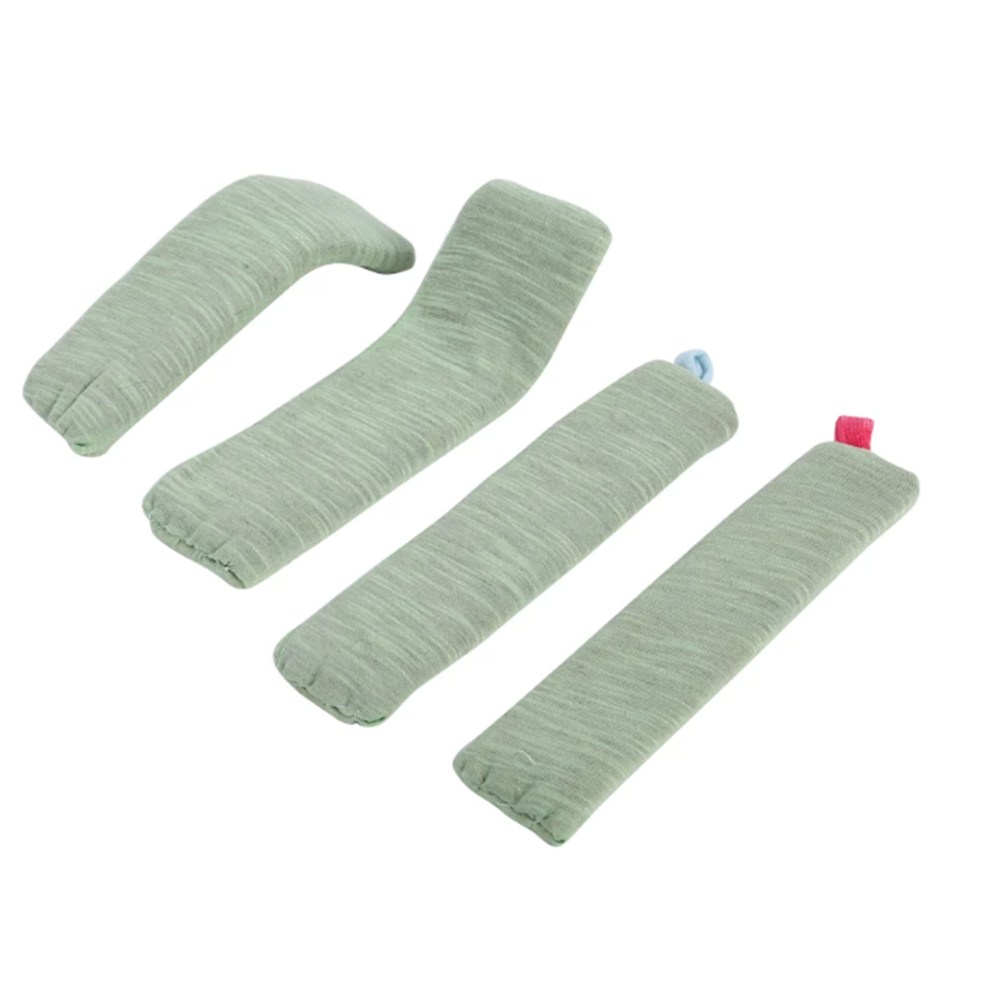
Fracture Fixation Splint (Recommended for Earthquake Scenarios)
Breathable and comfortable: Knitted fabric absorbs moisture and breathes, reducing stuffiness and sweating after fixation, improving comfort during recovery.
Sturdy and durable: Composed of multiple wooden boards of varying lengths and curvatures, offering strong structural support to effectively prevent re-displacement of fractures.
Complete specifications: Covers 12 types including forearm, distal radius, humeral shaft, tibia/fibula, femoral shaft, etc., including large upper/lower limb splints, suitable for fracture fixation needs across various body parts.
$320 $0
Knitted fabric absorbs moisture and breathes, not prone to sweating or stuffiness after fixation, facilitating recovery
The splint is mainly composed of multiple wooden boards of varying lengths and different curvatures, making it sturdier, more durable, and providing strong support
During the fixation process, avoid tying too loosely or improper use of padding pads, which can easily lead to re-displacement of the fracture.
Properly elevate the affected limb. When lying down, it should be above heart level; flex the elbow 90° and suspend the upper limb; place a pillow or lower limb pad under the lower limb to elevate it. Elevation facilitates blood circulation, helps reduce swelling of the affected limb, and prevents re-displacement of the fracture. Forearm
Distal Radius
Humeral Shaft
Surgical Neck of Humerus
Supra-shoulder Surgical Neck
Tibia/Fibula
Supracondylar Humerus
Supra-ankle Joint
Femoral Shaft
Intercondylar Humerus
Large Upper Limb Splint
Large Lower Limb Splint